Louis de Pointe du Lac
A History of the Vampire in Popular CultureLouis de Pointe du Lac is defined by the contradiction at the heart of the modern ethical vampire: he becomes immortal in order to escape grief, only to discover that undeath preserves suffering rather than curing it. His story, as presented through the film adaptation of Interview with the Vampire, makes vampirism less a triumphant fantasy than a punishment of prolonged consciousness, in which empathy survives the body’s transformation and turns every act of feeding into a moral crisis.
Identity and Human Background
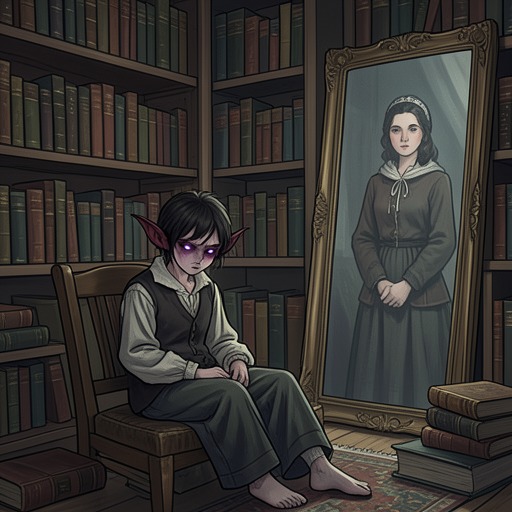
Louis’s human life is marked by catastrophic loss. He is a widower at twenty-four, grieving both his wife and his child, and the force of that grief causes him to neglect a plantation that had previously been successful. His withdrawal from ordinary responsibility is not presented as simple laziness or decadence: he deliberately courts danger, hoping that death will reunite him with his family in the afterlife. Death is therefore Louis’s desired escape before he ever becomes a vampire.
That desire places him in a sharply different position from the conventional predator. He does not pursue immortality as power, pleasure, or social elevation. When Lestat de Lioncourt notices him as a potential ally and offers to transform him, Louis accepts because he imagines vampirism might provide release from torment. The offer reverses his expectation. Instead of joining his dead wife and child, he is trapped in an existence where neither death nor emotional forgetfulness can finally be reached.
Transformation and the Burden of Immortality
Louis’s transformation converts a suicidal longing for death into a condition of endless survival. The central irony is causal: he accepts the supernatural precisely because he wants to escape pain, but the new life leaves him unable to use death as an escape route. His body changes, yet the grief that motivated the change remains active, giving immortality the shape of an extension rather than an interruption of mourning.
His continuing empathy becomes the defining moral resistance of his vampire existence. Louis is repelled by attacking humans and struggles against the practical demands of his new nature, whereas Lestat feels no comparable restriction. The contrast is not merely a difference in temperament. It creates the ethical conflict that organizes their relationship: Louis experiences feeding as a violation that must be justified, while Lestat treats predation as an ordinary expression of vampiric freedom.
The wider history of vampire fiction places Louis within a long transformation of the type. Varney had already been made sympathetic despite murderous tendencies, fighting his animal instincts and eventually killing himself to escape his eternal fate. Carmilla helped establish the modern literary vampire as a nocturnal and increasingly selective predator, while Count Orlok in Nosferatu represented a harsher, less erotic form of the creature. Louis belongs to a later development in which the vampire can be the morally troubled center of the story rather than merely its villain: modern portrayals increasingly allow vampires to be good or bad, traditional or radically altered, while preserving the question of what continued existence does to conscience.
Lestat and Claudia
Louis’s relationship with Lestat de Lioncourt is structured by dependence and power. Lestat presents himself with privileged, almost bratty confidence and barely conceals a desperate loneliness or desire for company. Louis, by contrast, remains emotionally vulnerable and morally hesitant. The apparent imbalance between them therefore conceals mutual need: Lestat wants a companion who will remain with him, while Louis seeks a way out of his grief and becomes bound to the very being who offers it.
The relationship turns more disturbing when Louis feeds from the orphaned Claudia in a moment of desperation. Lestat uses that crisis as an opportunity to transform Claudia, presenting the child to Louis as a gift. The gesture is not an act of simple generosity. Claudia becomes a pawn in Lestat’s personal politics, a token intended to bribe Louis into staying with him. The creation of a new vampire thus deepens Louis’s entrapment while making the household appear, from the outside, more like a family.
Claudia’s presence gives Louis’s existence its most unsettling form. Her mind develops while her body remains physically immature, producing the contradiction of an adult consciousness trapped in a child’s appearance. This recalls Eli in Let the Right One In, another figure whose apparent childhood conceals an adult or immortal condition. Louis is consequently caught between affection, responsibility, and the grotesque consequences of the transformation he helped make possible. Claudia’s eventual role as the undoing of them all exposes the instability beneath the household’s artificial domesticity.
Narrative and Cultural Significance
In the film adaptation directed by Neil Jordan and released in 1995, Louis de Pointe du Lac is played by Brad Pitt and recounts his life to the initially sceptical journalist Daniel Molloy. That interview structure makes Louis’s identity inseparable from retrospective narration: he is not simply a vampire who acts, but a vampire who must repeatedly explain what he became, why he accepted it, and why survival has failed to satisfy him. The framing preserves distance between the remembered life and the person who now tells it, allowing guilt and self-interpretation to shape the account.
Louis’s importance also depends on the cultural history into which his story enters. Earlier works supplied the vampire’s teeth, nocturnal habits, predatory elegance, aristocratic menace, and cinematic image. Dracula became the most influential literary vampire, while Count Orlok translated that threat into Expressionist film and Bela Lugosi established the public image of the classic Count. Louis inherits those conventions but redirects their emotional center. The vampire is no longer only the object of fear or erotic fascination; he is also the witness to the damage those conventions inflict on a conscious, morally resistant being.
The character’s afterlife belongs to a period in which vampires can appear openly, seek equality, use synthetic blood, or function as sympathetic figures rather than traditional monsters. Yet Louis remains distinct from the more relaxed modern tendency to make the vampire whatever audiences desire. His immortality never becomes uncomplicated liberation. Even amid a culture that can turn vampirism into romance, music, fashion, or spectacle, Louis preserves the older association between blood and moral cost, making the fantasy of eternal life answerable to grief, responsibility, and the inability to die.